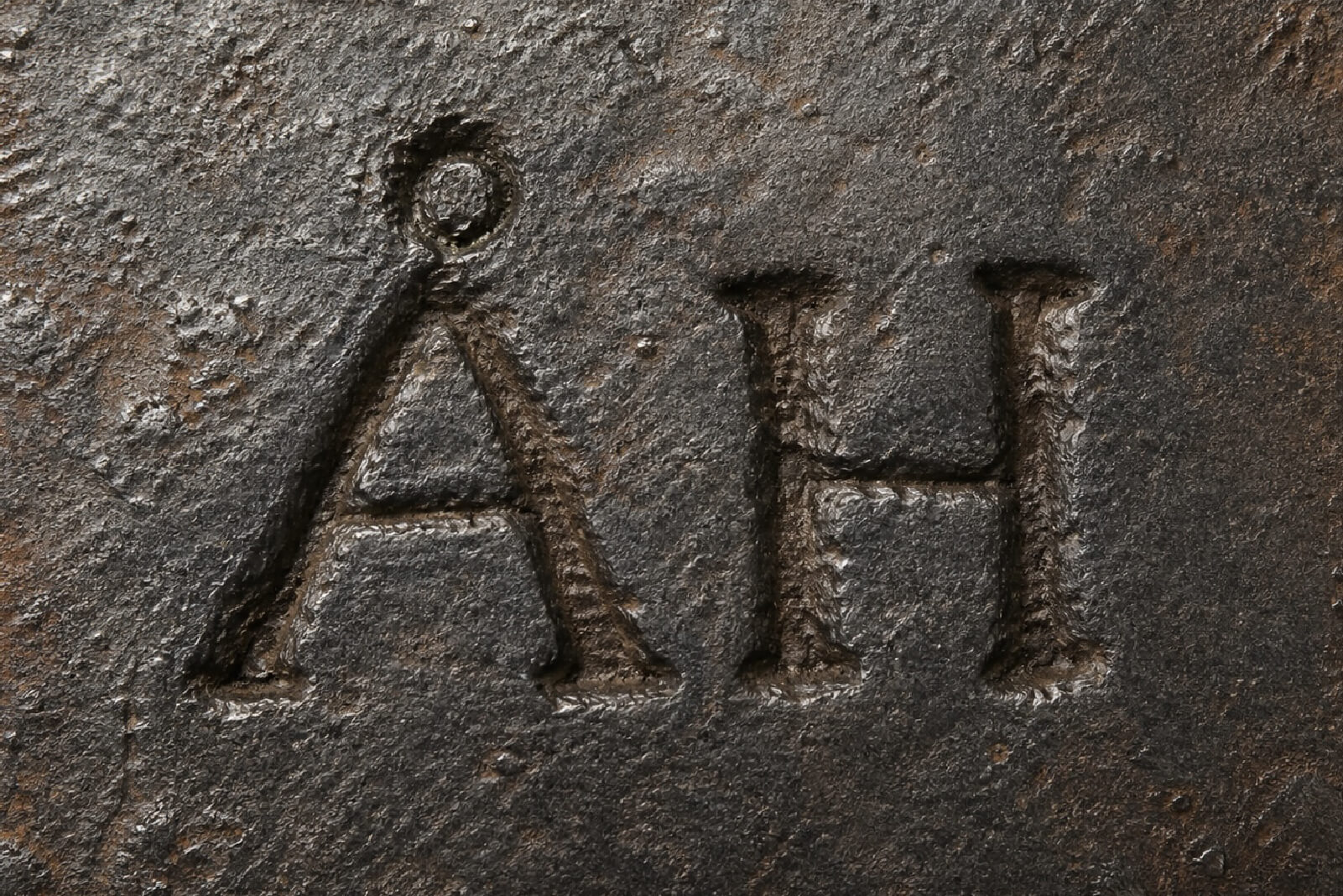
A symbol of early quality assurance and export standards
In 1753, the Åshammar Forging and Nail Foundry officially received the “ÅH” stamp to mark its products. The Swedish government increasingly regulated iron production around this time through Bergskollegium, a dedicated government body that oversaw mining, smelting and forging activities throughout the country.
Iron stamps served as an early form of quality control as each product could be traced back to a specific producer. This raised the international reputation of Swedish iron and helped to establish the industry as an essential part of the national economy and a key export.
Stamps in the 1700s were hand-forged tools that typically left imperfect impressions with variations in depth and alignment normal, especially as stamps wore down over time. Minor differences in a stamp’s shape can help historians date iron products or even identify specific production batches.
These iron stamps naturally became part of the long-term industrial identity of a forge. In Åshammar, Jonas Jönsson even chose to revive the ÅH stamp in the late 1800s to continue the site’s industrial heritage of quality and craftsmanship.